
Best .450 Bushmaster Hunting Loads: 100 & 200 Yard Ballistic Test
Best .450 Bushmaster Hunting Loads: 100 & 200 Yard Ballistic Test Tested Ammo Muzzle Velocity (fps) Muzzle Energy (ft/lb) Â Hornady 250gr FTX | B.C.
FREE Shipping* on $99+ & Orders Ship Same or Next Business Day
*Not available in AK, HI or for Dealer Accounts
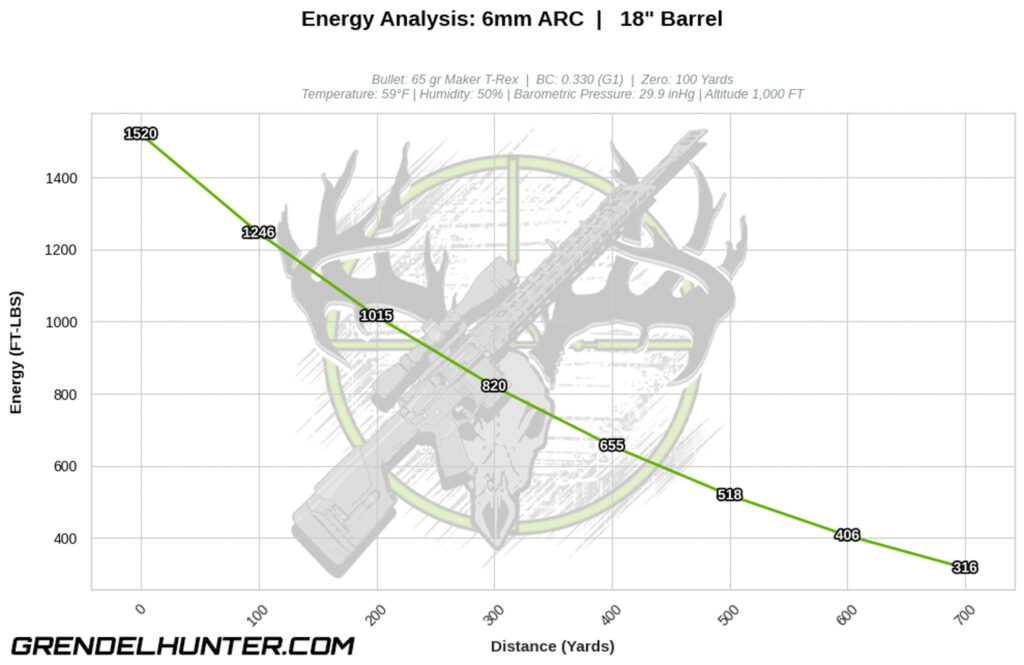
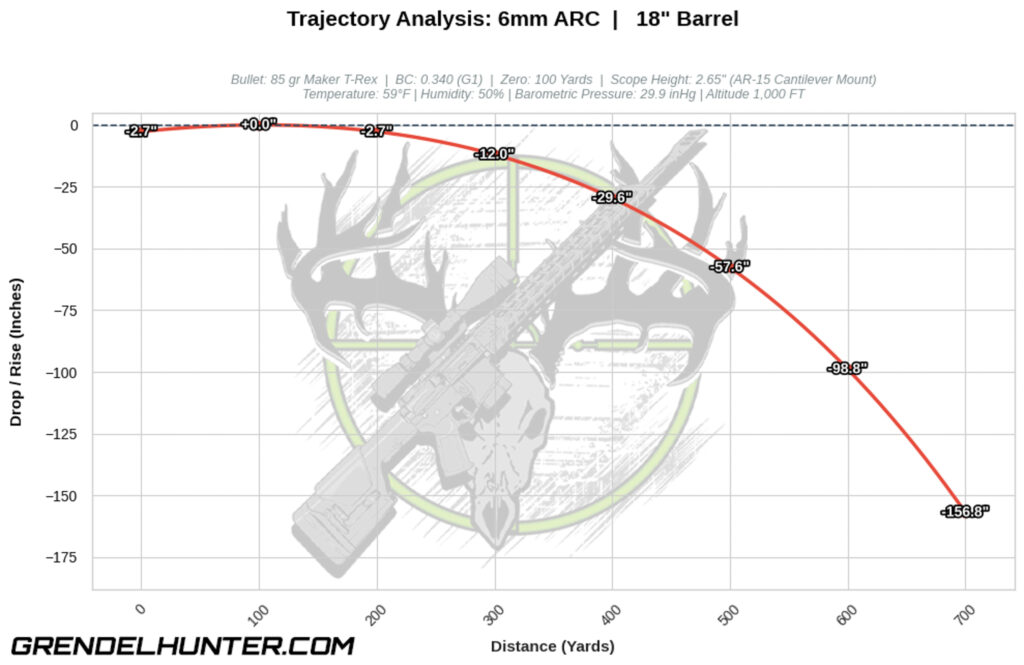
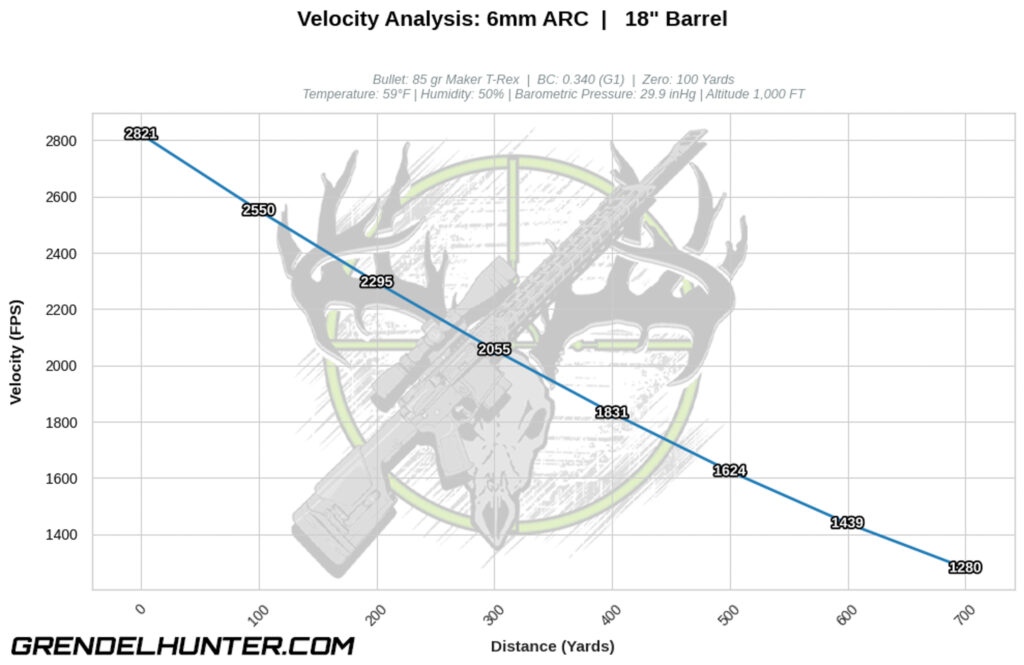
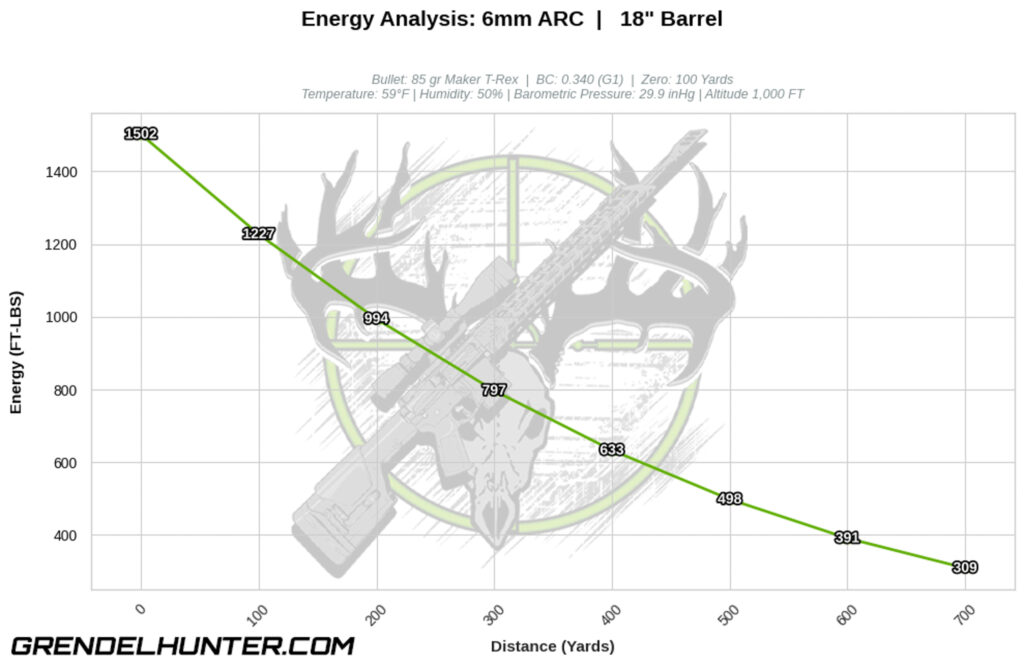
Tested Ammunition | Ballistic Coefficient (G1) | Muzzle Velocity (fps) | Muzzle Energy (ft-lbs) |
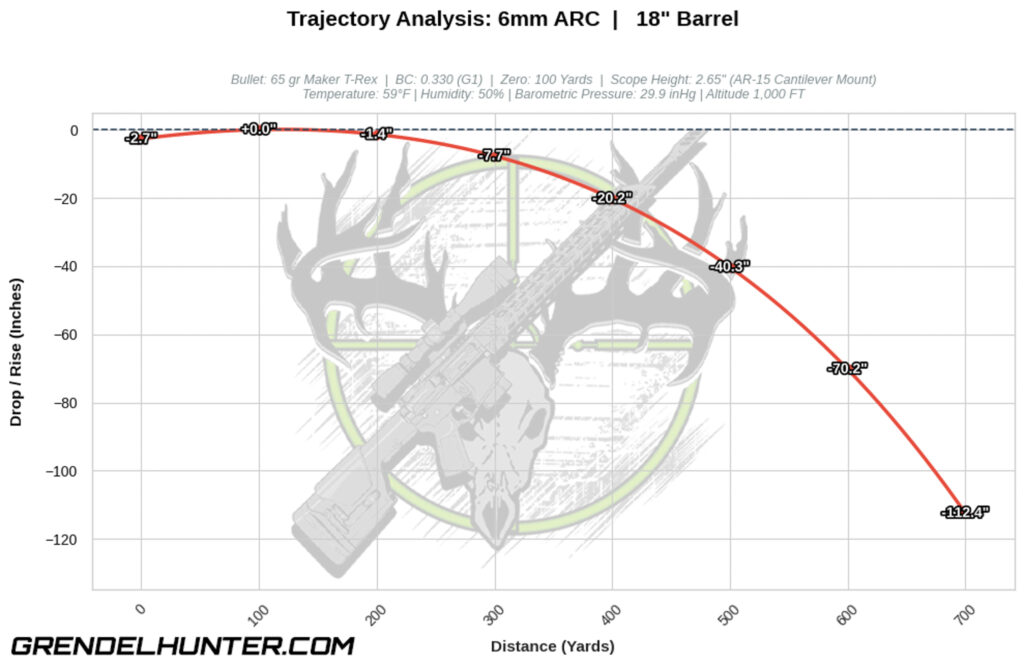
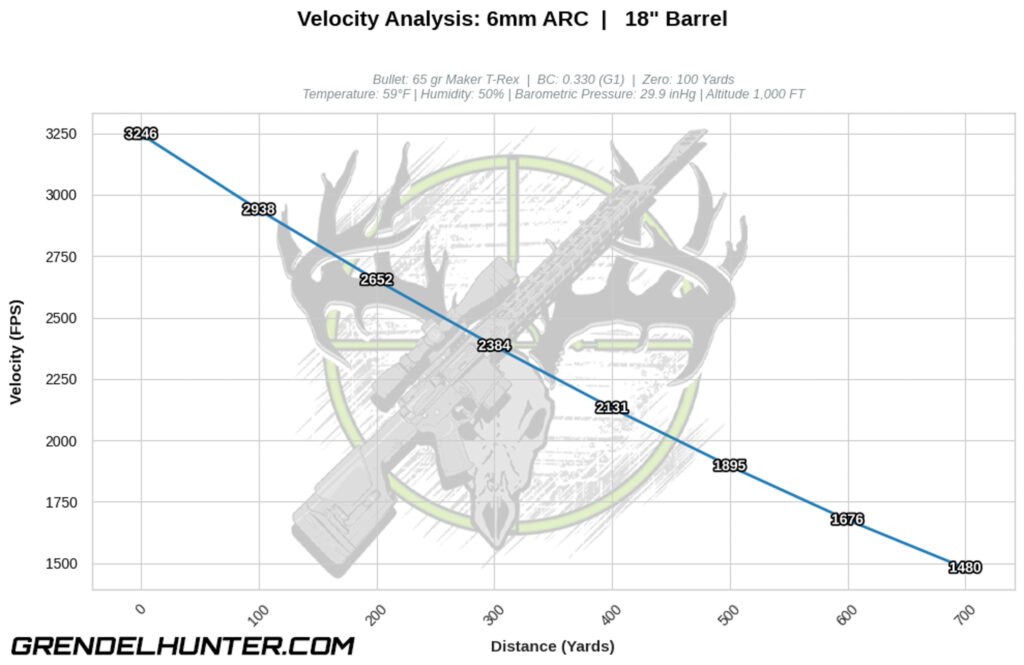
| 65gr Maker T-Rex | .330 | 3,246 | 1,520 |
| 85gr Maker T-Rex | .340 | 2,821 | 1,502 |
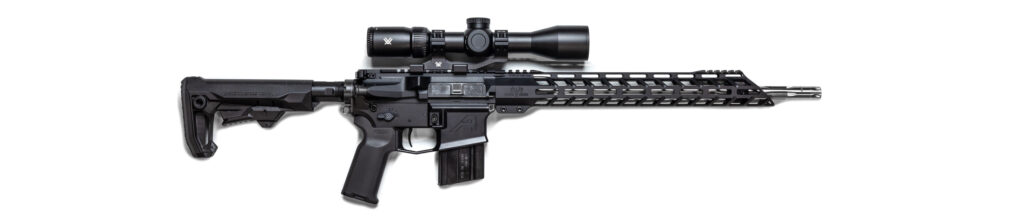
Tests conducted with a 18″ Grendel Hunter 6MM ARC Upper.
Muzzle velocities measured with a chronograph using 10 round strings
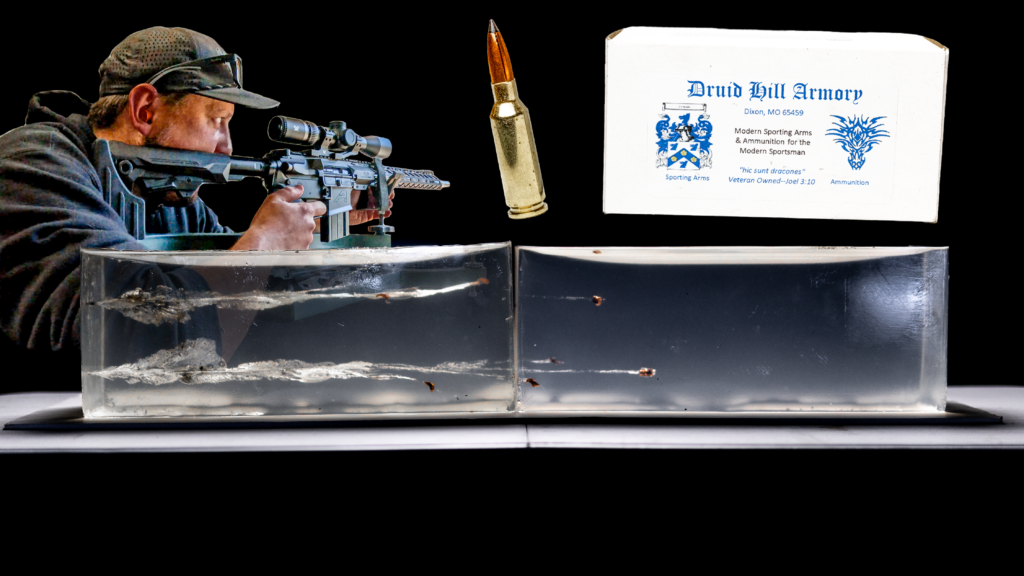
When it comes to hunting medium size game with the 6mm ARC, for the first 5 or 6 years the caliber existed, your choices for ammunition were pretty limited. The lead core 103gr ELD-X from Hornady was almost your only option. But now, there are some new players in the game, and we decided to see what they can do. We got two factory load offerings from Druid Hill Armory  and tested in ballistic gel, the 65gr and 85gr Maker T-REX solid copper bullets.
If you aren’t familiar with Maker T-REX projectiles, they are CNC-machined, solid-copper bullets engineered specifically for devastating terminal performance on medium-sized game. These all-copper rounds are advertised to have 3X expansion and nearly 100% weight retention.
To see how the 6mm ARC T-Rex loads perform, we took them both out to the range and shot them in to 10% gel from Clear Ballistics at 100 yards. This gave us a good look at how they compare not only to one another, but also how they stack up against the heavier, lead core 103gr ELD-X.
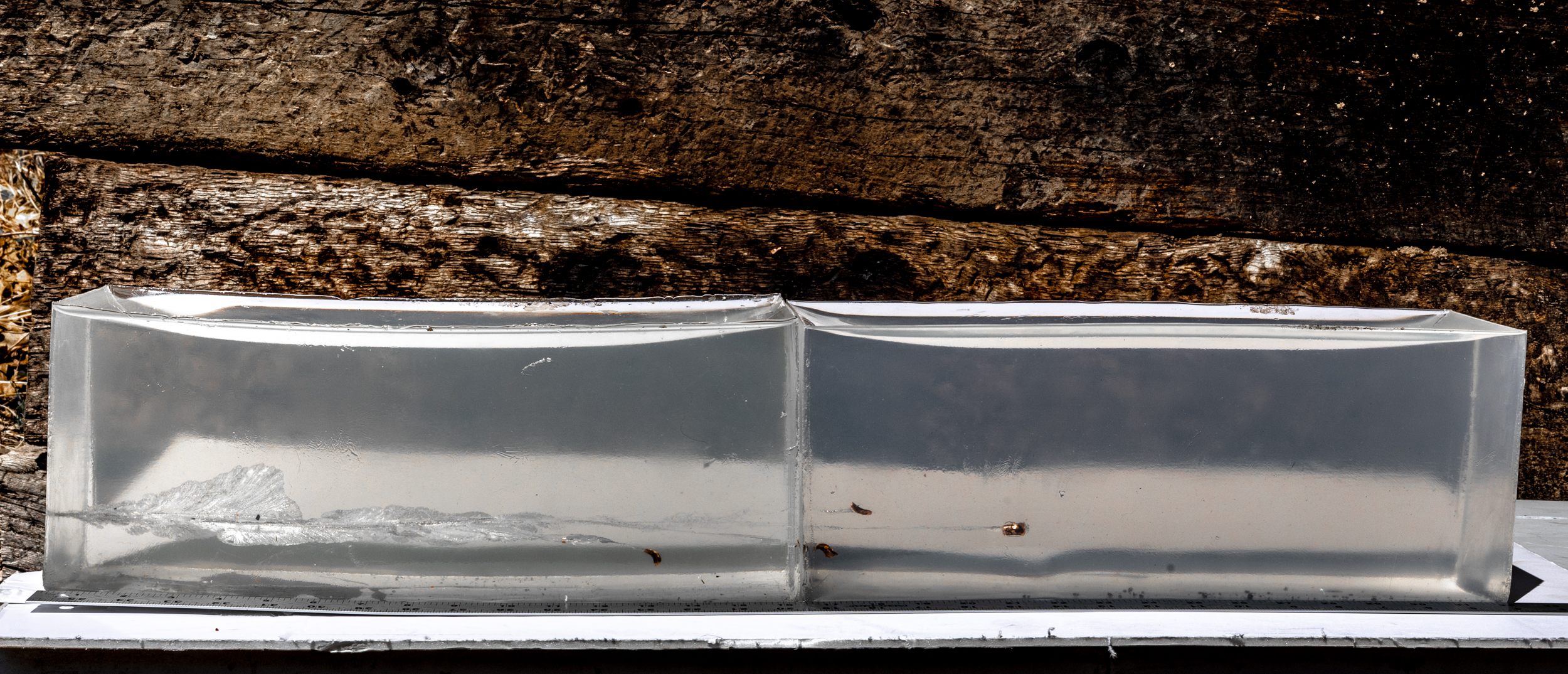
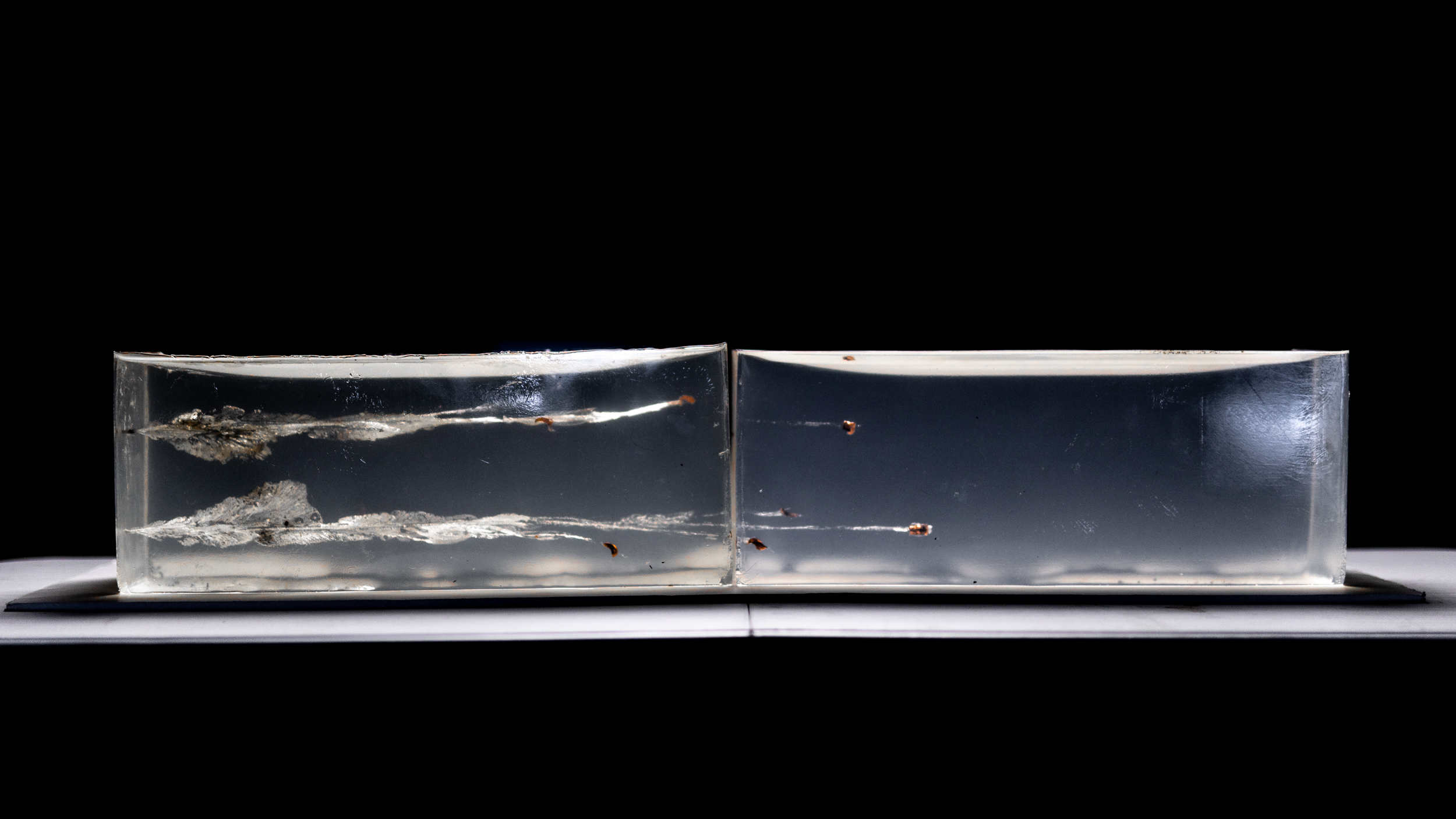
Well, right off the bat, things looked a bit different than we expected, but not necessarily in a bad way. The Maker T-REX bullets are advertised to have nearly 100% weight retention, but as you can see, the three copper petals expanded, peeled back, and ultimate fragmented off. We had expected to see a simple, fully intact, flower shaped bullet as we walked up to the gel, but reality was more interesting. The T-REX actually created a sort of unique, highly effective “hybrid” wound profile.
The First 11 Inches: Instantly upon impact this bullet dumped a devastating amount of energy into the gel block. It tore open a wide, aggressive wound cavity that stayed pretty large all the way through the first 11 inches.Â
The Multi-Channel Effect: At around 8 inches is where it looks like the petals started to fragment off. Once those petals broke away, they acted like independent pieces of shrapnel. From that point forward, the track split into 4 smaller wound channels. The 3 distinct offshoot tracks carved out by the fragments were each about 4 inches long.
Deep Straight-Line Penetration: After shedding that frontal area at about the 8 inch mark, the main mass of this projectile acted like a freight train. The solid remaining base had excellent forward momentum, tracking in a perfectly straight line deep into the second gel block before finally coming to rest with 21 inches of total penetration.
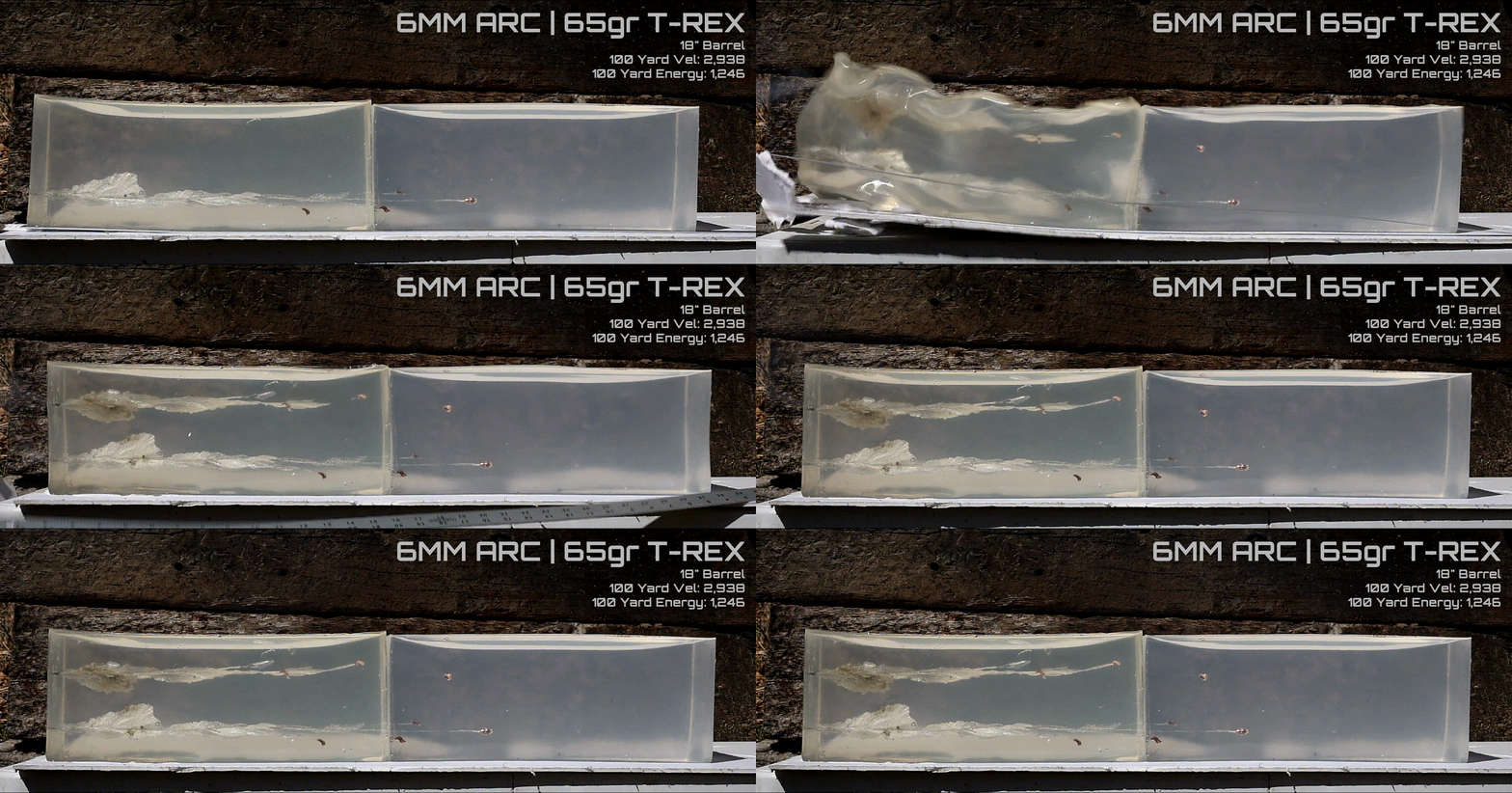
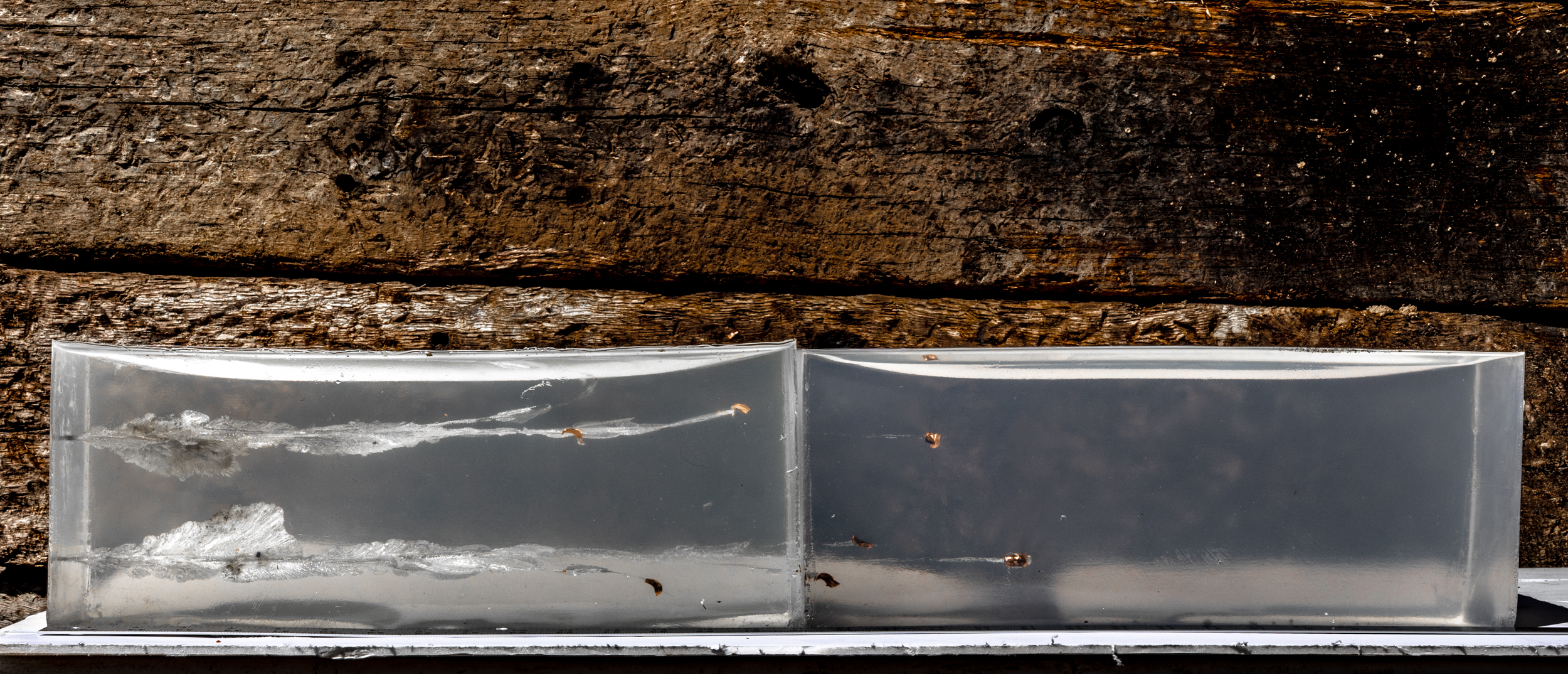
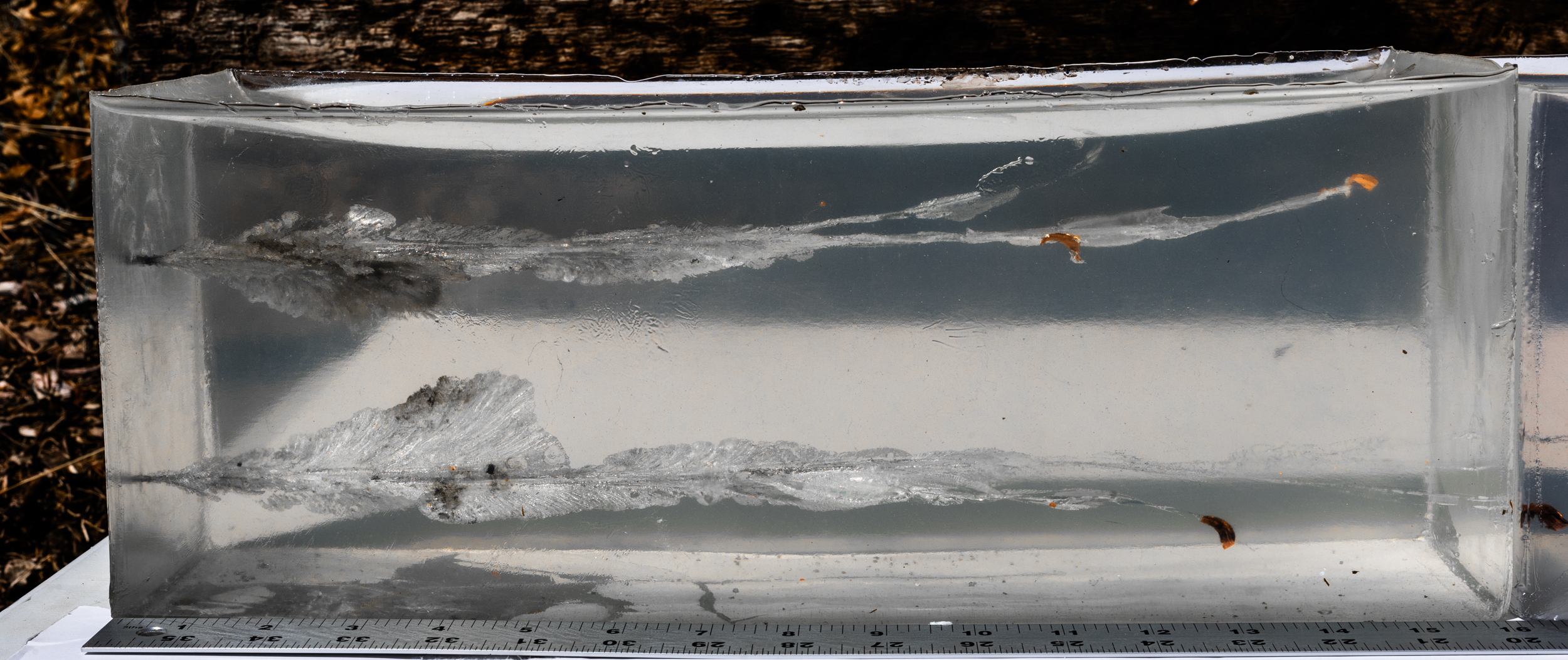
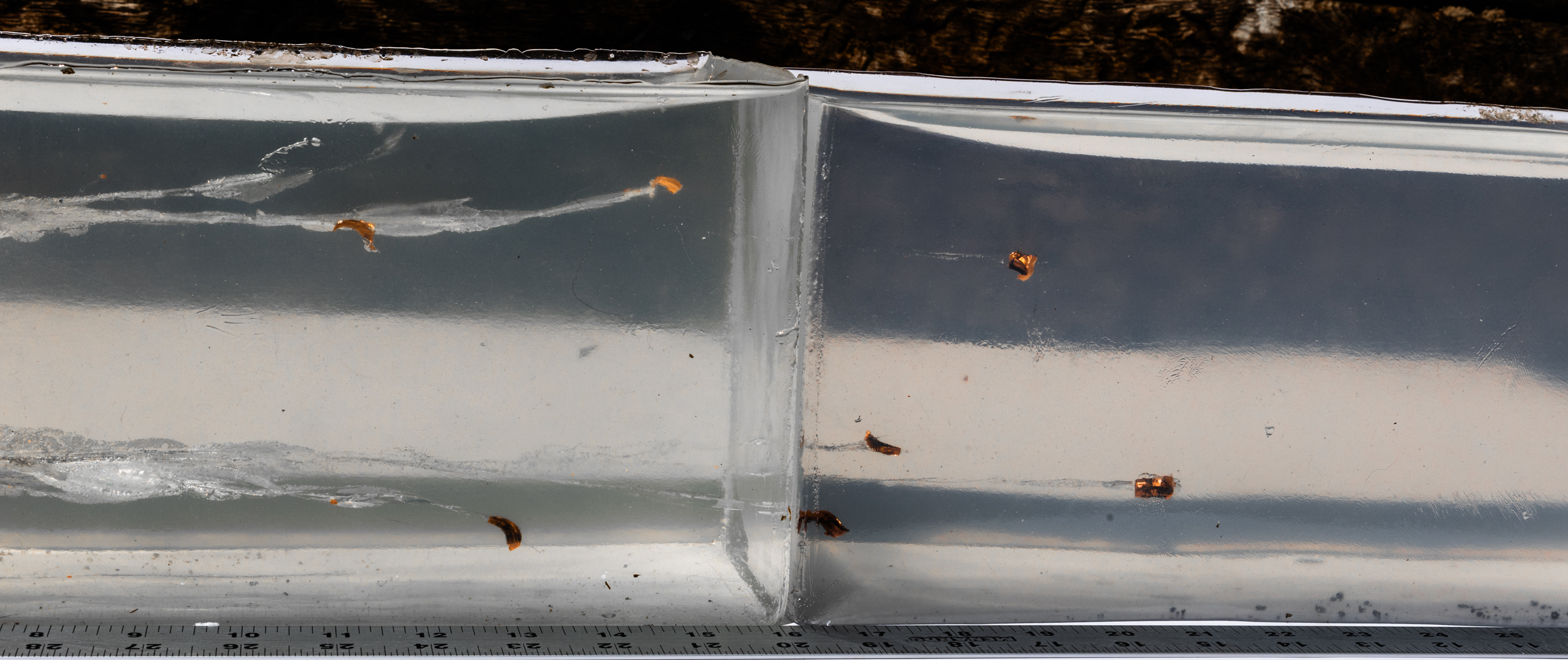
Next up, we have the lightweight 65gr T-REX, and it gave us a very similar result to the heavier load, but with a fascinating look at how velocity and bullet weight have an effect. While both bullets are carrying approximately the same amount of energy on impact, the lighter 65gr is zipping along almost 400 fps faster than the 85gr. Once again, we saw the bullet open and dump energy right away and copper petals held together initially before tearing off deep in the block. (We lost one petal out of the top of the block)Â
Right at the entry point, it tore open a large, violent pocket of hydrostatic shock. Because it had so much speed behind it, that initial explosion of energy stayed strong and wide all the way out to roughly the 7-inch mark.
Also at 7 inches, it looks like this is where the petals flared off and create their own separate wound channels.
Once those petals scattered, the solid remaining base kept its momentum, tracking in a perfectly straight line through the rest of the block before finally coming to rest with 19 inches of total penetration.
Looking at the gel and thinking about it as if it were the chest cavity of a whitetail deer, I actually really like what I’m seeing. If we put aside for a moment the fact that no, we did not have near 100% weight retention, there are some real potential benefits to these performances to consider. Let’s say you’ve taken what should be a double lung shot on a deer. The bullet opened and begins dumping energy into where the first lung would be. It’s expanded and intact until it reaches roughly the middle of the deer’s chest cavity. Then over the next few inches, so through the second lung, you get the fragments and the main mass each poking their own individual holes. Having three sharp copper blades ripping through the heart and lungs while the solid base punches a straight path through is a recipe for an immense amount of bleeding. At minimum, it looks like that main mass will definitely give you an exit wound and there’s potential that some or all of the fragments could as well. If any of the fragments did remain inside the deer, unlike the fragments we see in testing lead core bullets, these are large, minimal and easier to find. I rather like that.
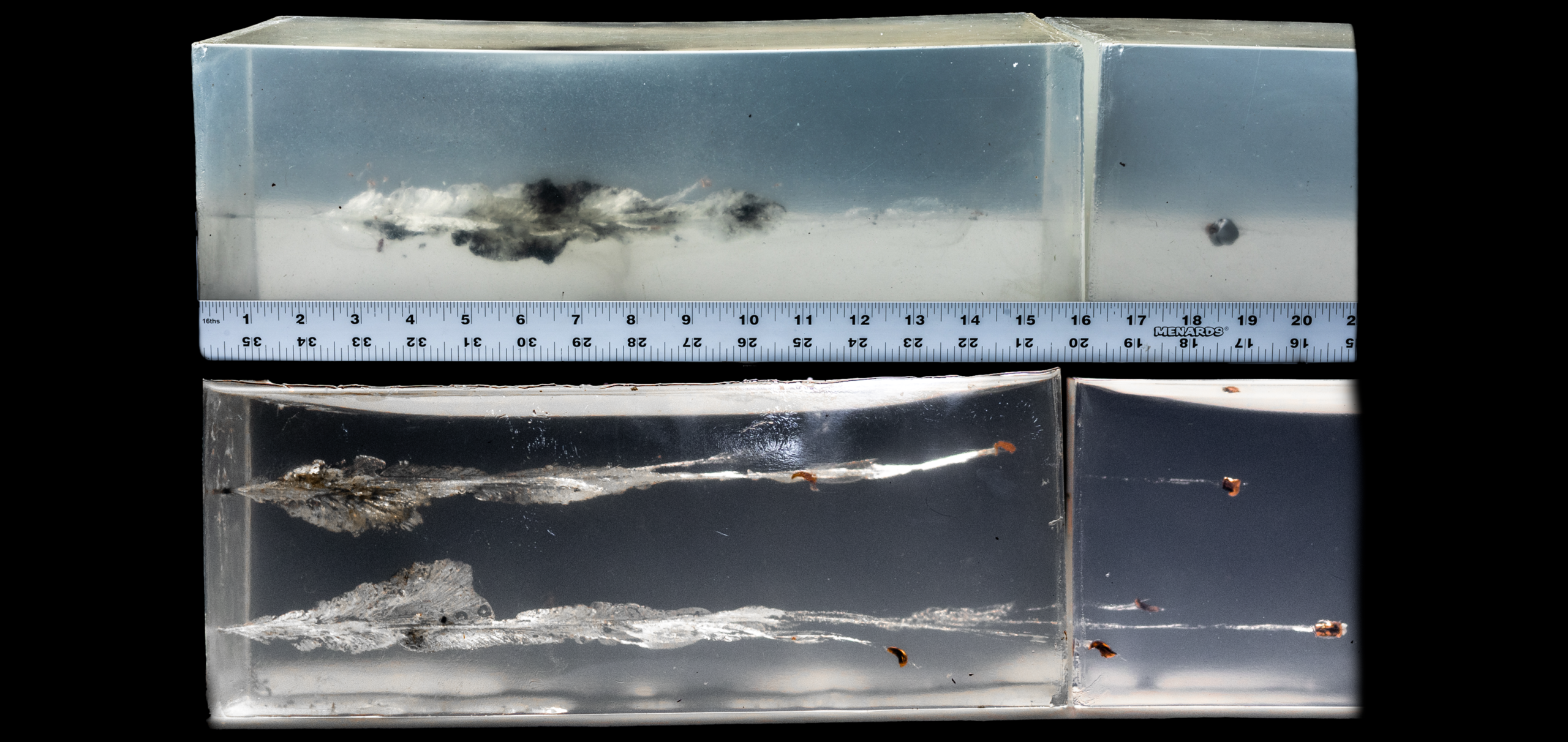
In the photo above, we are comparing the two copper Maker 6mm ARC bullets to the Hornady 103gr ELD-X.Â
When you look at them side by side, there are actually a ton of similarities across all three tracks in terms of overall wound cavity size and total penetration. The only real nuance in how they got there was the timing. The ELD-X cavity took just an inch or two longer to fully get going in the block, whereas the T-REX rounds seemed to open up almost instantly upon impact.Â
While both bullet designs fragmented during their journey, the way they did it is completely different. The ELD-X left lots of tiny, lead and copper jacket fragments, whereas the T-REX snaped off into much larger, razor-sharp copper petals. A massive perk to that monolithic design is that those big petals act like deliberate cutting edges—plus, you don’t have to worry about any lead contamination throughout your meat.Â

Best .450 Bushmaster Hunting Loads: 100 & 200 Yard Ballistic Test Tested Ammo Muzzle Velocity (fps) Muzzle Energy (ft/lb) Â Hornady 250gr FTX | B.C.

See how the Hornady 103gr ELD-X performs in the 6mm ARC at 100 and 370 yards. Detailed ballistic gel results, velocities, and expansion data for AR-15 hunters

Is the 6.5 Grendel a true 400-yard round? We test 129gr AccuBond LR gel expansion at 100 & 425 yards to see if it hits the 1,000 ft-lb ethical energy threshold.