QUESTIONS? CALL US AT 715.790.1322

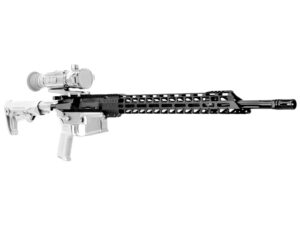
A modern rifle with scope ammo boxes magazines and hearing protection on a wooden surface.

22″ .22 ARC Ballistics

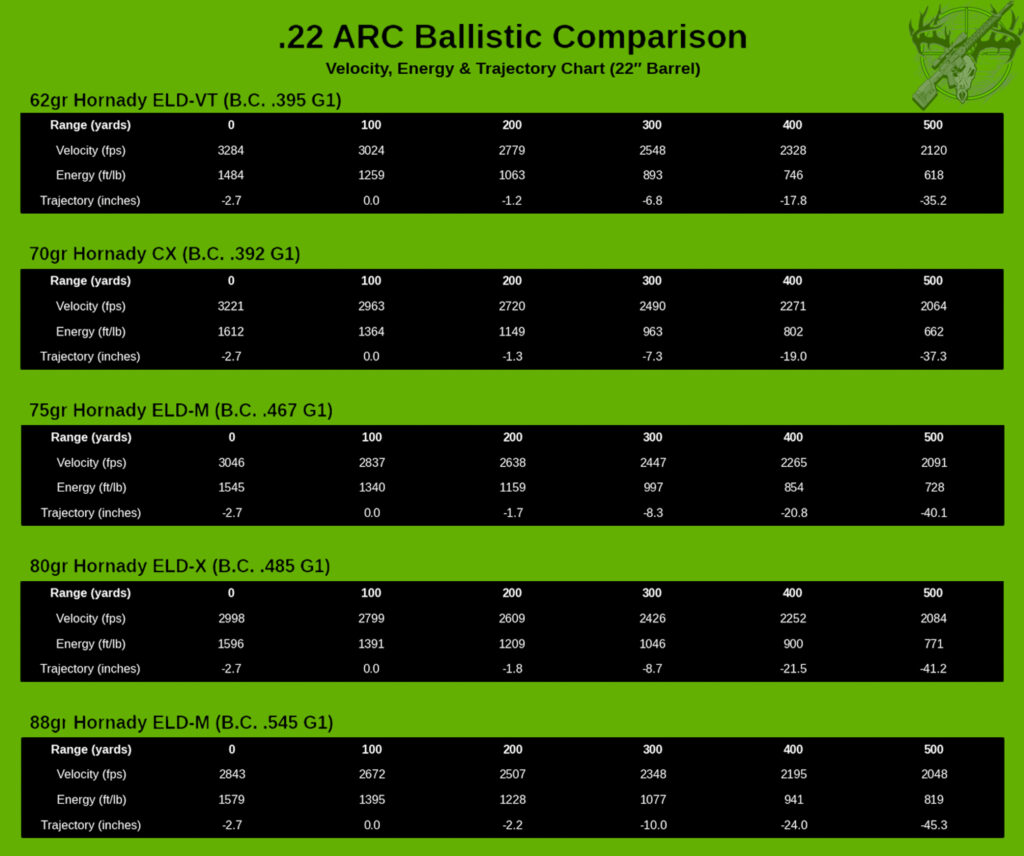
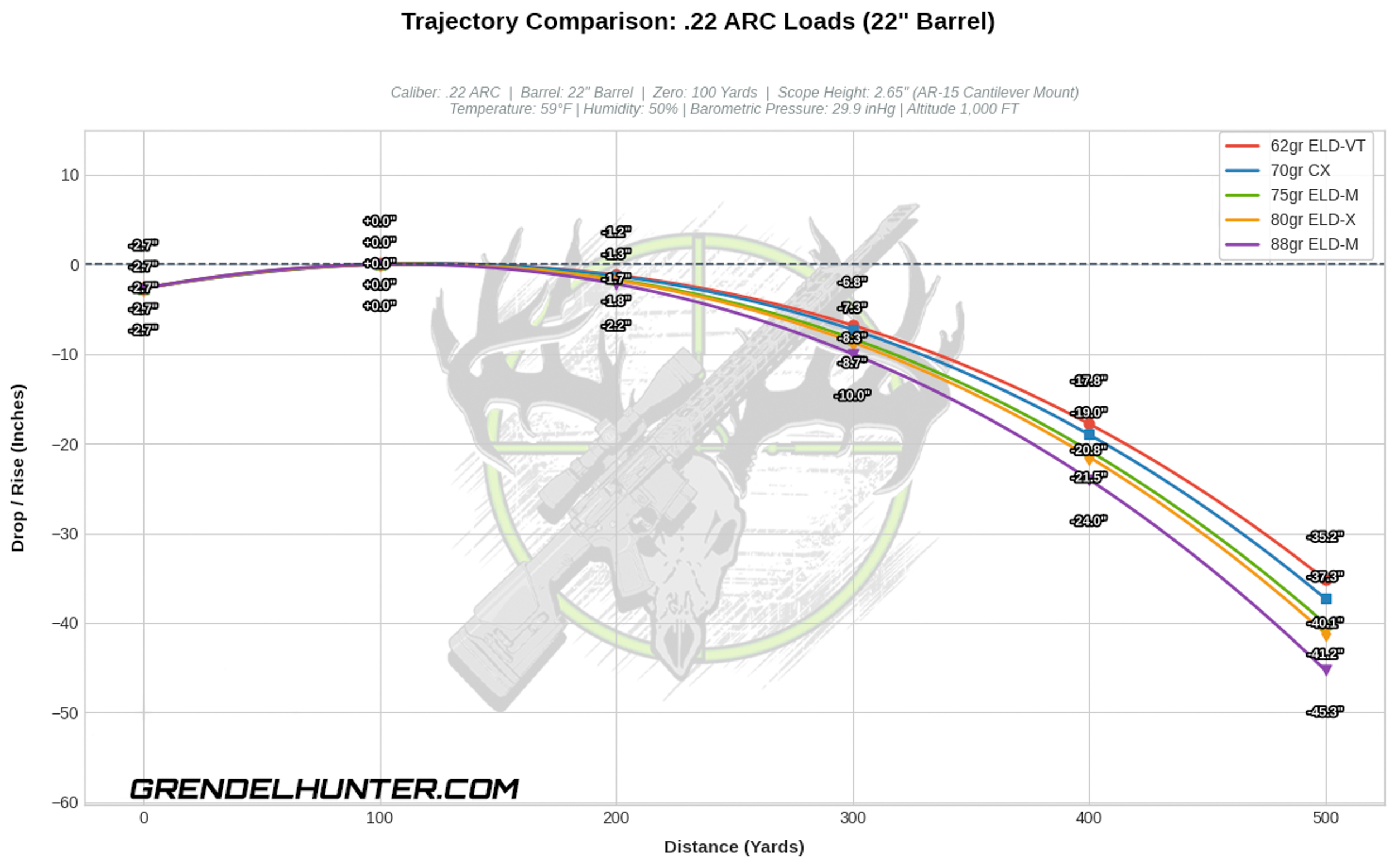
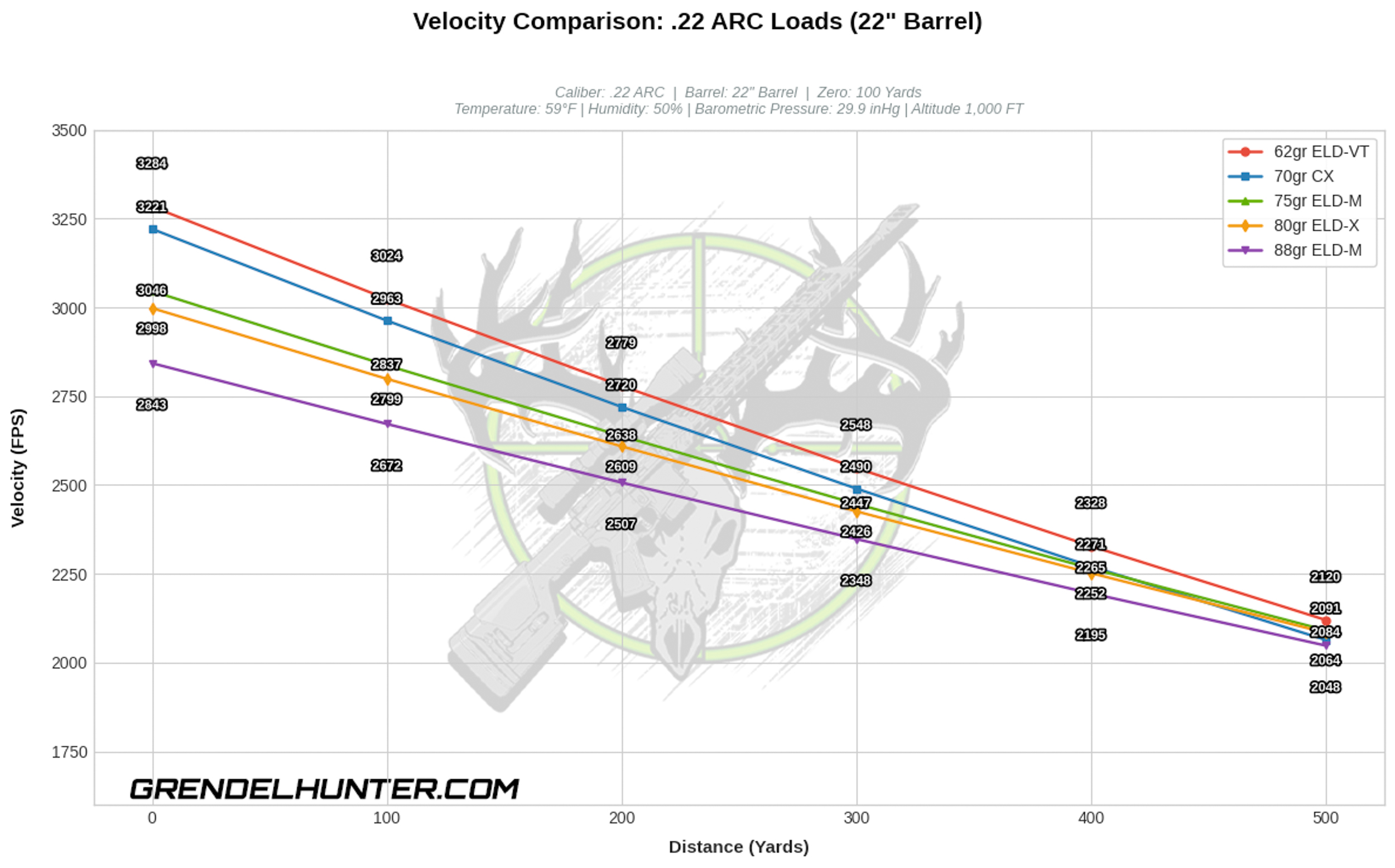
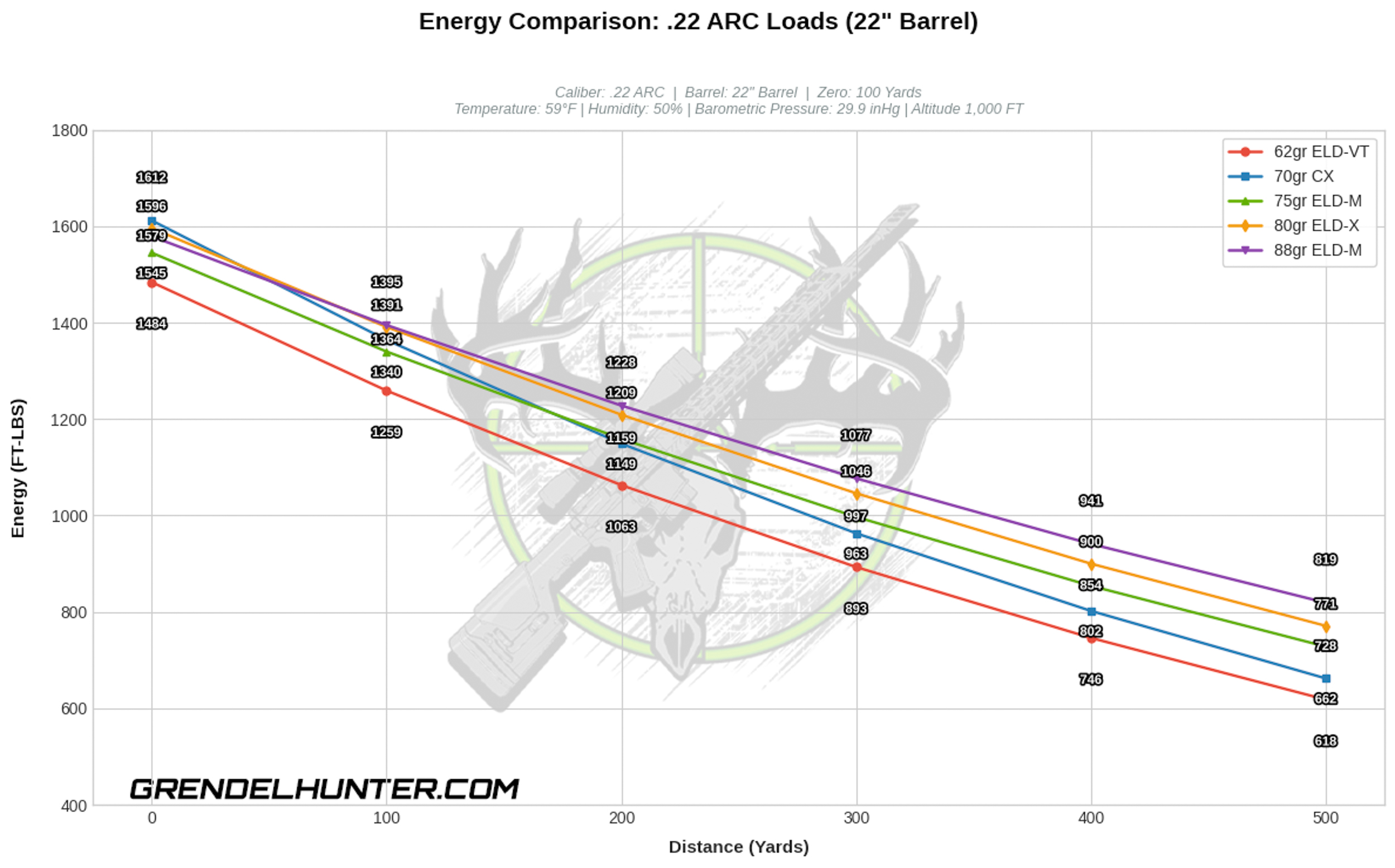
When you’re trying to figure out the right rifle setup for your next build, everything comes down to real numbers. Deciding on a barrel length means looking closely at how it impacts your muzzle velocity, how flat your trajectory actually is, and how much downrange kinetic energy you’re keeping. Every length has its own specific performance characteristics, and in this post we will be testing a 22″ barrel configuration to get a practical look at what the cartridge delivers on the range.

To see exactly what this cartridge is capable of when paired with a longer barrel, the Grendel Hunter staff took our custom uppers out to the range. We ran a variety of factory ammunition options and spent some time tracking exactly how they perform as they travel downrange

Loads tested

  • 62gr Hornady ELD-VT  
  • 70gr Hornady CX  
  • 75gr Hornady ELD Match 
  • 80gr Hornady ELD-X  
  • 88gr Hornady ELD Match 

A Quick Heads-Up on the Numbers: We tracked all of this performance data ourselves during our field testing. Talking ballistics is always a mix of science and a ton of outside variables, so while we hope this info helps you out with your build planning, don’t use it as a definitive “cheat sheet” or a shortcut for shooting your own dope card. Every rifle is a rule unto itself, so you’ll definitely want to gather specific muzzle velocity and bullet drop data tailored to your own setup, local weather, and ammo lots.

A high-contrast, dark-themed ballistic reference chart comparing five different Hornady bullet profiles fired from a 22-inch barrel in the .22 ARC caliber. Set against a solid, vibrant green background, the graphic stacks five distinct, borderless black data tables for clean horizontal tracking. The comparison covers the 62gr ELD-VT, 70gr CX, 75gr ELD-M, 80gr ELD-X, and 88gr ELD-M projectiles. Each individual table maps out velocity (fps), kinetic energy (ft/lb), and bullet trajectory drop (inches) at 100-yard increments from the muzzle out to 500 yards, providing an easy-to-read layout for evaluating how varying bullet weights and ballistic coefficients impact downrange trajectory and energy retention.

Leave a Reply

Your email address will not be published. Required fields are marked *