AR-15 Gas Blocks, Gas Tubes, & System Tuning
Showing 13–14 of 14 results
-
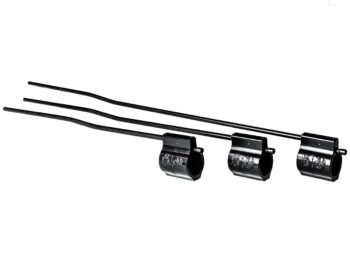
Rated 5.00 out of 5$12.99 – $15.99Price range: $12.99 through $15.99 Select options This product has multiple variants. The options may be chosen on the product page
Showing 13–14 of 14 results
Master Your AR-15 Gas System: Eliminate Over-Gassed Cycling
Tuning your AR-15 for flawless cycling doesn’t have to be a complicated guessing game. Today, we are pushing this platform far beyond anything Eugene Stoner ever envisioned in the 1950s—running suppressed setups, shorter barrel lengths and versatile new calibers with a massive envelope of bullet weights. When you move away from the original blueprint, your rifle may simply need a little fine-tuning to account for those new variables. With a bit of knowledge, a few pointers and the right components, achieving that perfectly balanced, soft-shooting rifle is completely within your reach.
Suppressors may be the single best investment you can make for hearing protection and you only get one set of ears, but let’s be honest—adding one to an AR-15 can introduce new problems. The restriction they create at the muzzle forces dirty, high-pressure gas backwards down the barrel. The increased backpressure they create at best means a filthy bolt carrier group, harsher recoil, accelerated component wear, and a face full of gas. At worst, it means a malfunctioning rifle.
To complicate things, and this applies to unsuppressed rifles as well, barrel manufacturers have to choose gas port sizes as something of a compromise. To cycle properly, ammunition with a lighter bullet and a lower pressure charge requires a larger gas port size (more volume of gas) than ammunition with a larger projectile and higher pressure load. Sometimes there can be a lot of variation in loads even within a single caliber. For example, the 6mm ARC is an extremely useful AR-15 caliber with loads ranging from little 58gr varmint bullets up to 108gr match bullets. A gas port that is the perfect size for cycling some hot 103’s or 108’s might not be quite big enough for some average pressure 80’s. To account for this, barrel manufacturers choose a size large enough to hopefully cycle everything. Some manufacturers take this a little too far and even unsuppressed, things can be a bit gassy.
So now you throw a suppressor onto that already generously ported barrel and the system gets violently over-gassed. The wide operating envelope in certain calibers, especially if you’re suppressing, is exactly why a premium adjustable gas block isn’t just an accessory—it’s a mechanical necessity to tune the system.
Tuning an AR-15 isn’t rocket surgery.
It should feed smoothly, kick spent brass consistently back towards about the 4 o’clock position and lock the bolt completely to the rear on an empty magazine. If your rifle isn’t hitting that baseline, find your symptoms below to get it dialed in.
How the Rifle Cycles (Over vs Under Gassed)
Cycling – The rifle should fire, extract and eject the spent case, then strip and load a new round from the magazine.
The Over-Gassed Malfunctions:
If the rifle is extracting the spent case from the chamber itself, but it doesn’t eject it and tries to load a new round causing a jam, this is usually a sign of an over-gassed AR-15.
The bolt is flying back forward and trying to load another round before the spent case has cleared the ejection port [1]. This is not uncommon after adding a suppressor to the equation. When this happens, you may see what’s called a stovepipe where the spent brass is sticking partially out of the ejection port looking kind of like a stove pipe coming out the roof of a house (see photo above). In this case, you’re going to want to turn the gas down a bit using an adjustable gas block.
If the rifle is extracting, but not ejecting or trying to load another round, you can sometimes see a stovepipe here too. Basically, the rifle doesn’t have the “oomph” for the bolt to make it back far enough to kick the brass, much less strip a new round from the mag. If you see this, it’s going to need some more gas.
If the BCG is making it through extraction and ejection, but not picking up the next round, it’s going to need some more gas. These last two examples are usually signs of a short stroke [2] and a short stroke is usually a sign of not having enough gas for the BCG to make it far enough to the rear [3]
Notes
[1] Something else that can cause this exact same malfunction is an extractor hanging on to the spent brass longer than it should. Three reasons this might occur: 1. The extractor has excessive tension on it. Under the AR-15 extractor you will usually find a spring, rubber insert and O-ring. If the combination of these is too stiff, you can try removing the O-ring. Be aware though that some companies use a really squishy, rather weak insert, so removing the O-ring can leave you with too little tension. If that happens, the bolt can slip off the case head after firing and you’ll have a failure to extract. Ultimately, it’s about having the right tension, regardless of the combination of spring, insert and O-ring. We find that usually a good spring and insert is the right balance. 2. The extractor is digging into the brass excessively possibly due to it being too sharp or pointy. This is fairly common in the AR world, or at least it’s something we’ve noticed over the years with the Grendel and ARC extractors. Those “teeth” on the extractor can grab ahold of the case head. You can check this by hooking a piece of spent brass under the extractor and then using it to depress the ejector. As you slowly release the pressure and the ejector pushes the case ahead away from the bolt face, if the brass falls free, the extractor probably isn’t digging in too much. If the brass hangs there, it’s potentially a problem. There are a couple of solutions. You can get a new extractor (Our Grendel/ARC extractors have a more rounded profile) or you can try to smooth those harsh corners. 3. Overly soft brass. The reality is that not all brass is created equal and as any hand loader will tell you, a lot of the brass quality out there has gone down over the years. Brass from a manufacturer that used to get 5 reloads might now get 2. Such is life. In any case, even a properly gassed gun can present as one that is over gassed if there’s a problem with the extractor not letting go of the brass on time.
[2] In cases of extreme over gassing or a rifle running way too fast for the magazine, the bolt may move all the way back extracting and ejecting the spent case and then begin moving forward before the next round is lifted into place. What looks like a short stroke can actually be a bad magazine (weak spring) or an over gassed gun.
[3] Things other than insufficient gas can cause a BCG not to travel all the way to the rear (short stroke). For example, some after market bolt catches make contact with some aftermarket uppers in a way that prevents them from fully disengaging. Since the bolt catch is partially engaged, it is rubbing on the bottom of the BCG when cycling thus wasting some of the energy and causing it to short stroke. Another example is that of a magazine being held slightly too high in the lower. Whether due to the lower’s magazine catch area being milled slightly too high or the magazine being bad, the result is the same. Extra pressure on the bottom of the carrier while cycling wastes energy. A buffer spring that is too stiff or ammo that is too light can give you the same result: A short stroke.
Checking the Bolt Catch & Carrier Position
Locking Back – The BCG should lock to the rear on an empty mag after firing the last round. If the rifle is cycling fine, but goes back into battery after ejecting the last round rather than locking to the rear, this is usually a sign of a short stroke. The BCG makes it back far enough to strip rounds from the magazine, but not far enough to lock open.
If your BCG is locking back after the last round, you should still check to see that the bolt itself is engaged with the bolt catch. When a rifle is just barely under gassed, it is not uncommon to see the bolt catch engage with the front of the carrier rather than the bolt face. The BCG didn’t quite make it back far enough for the bolt catch to block the bolt, but it will catch on the front of the carrier.
An easy way to tell is to look at the bolt when the BCG is locked open. If the bolt itself is protruding out over the magazine a little bit, the catch caught the carrier and it may need just a touch more gas.
Reading Your Brass Ejection Pattern
Brass Ejection Pattern – The ejection pattern of brass is not a perfect way to determine if or by how much an AR is over or under gassed. Other factors such as the buffer system, ejector, extractor etc can come into play. But let’s assume that all other things are normal because ejection patterns can be a very useful tool, especially for fine-tuning your gun.
If you’ve gone through the above items and your rifle is cycling and locking back properly, then look at where your brass is landing:
Perfectly Tuned (3:30 to 4:30): If your brass is landing somewhere near 4 o’clock, you probably have a perfectly tuned rifle.
Slightly Over-Gassed (1:00 to 2:30): If your brass is landing at 2 o’clock (forward a little bit), then you are probably still a little bit over-gassed. You can click your adjustable gas block down slightly.
-
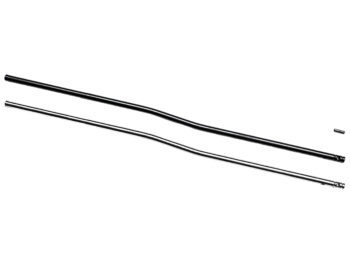
$74.99 – $87.99Price range: $74.99 through $87.99 Select options This product has multiple variants. The options may be chosen on the product page